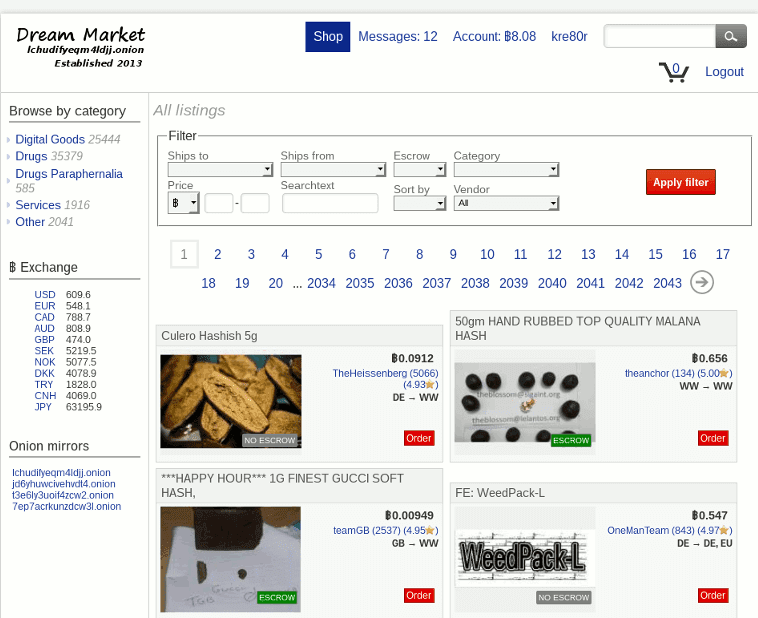
In recent years, the dark web has surfaced as a captivating yet contentious realm for trade. This hidden part of the web, often obscured from conventional search engines, provides a singular marketplace where secrecy and confidentiality reign supreme. As people more and more seek out substitutes to mainstream retailers, darkweb markets have become a novel frontier for those prepared to navigate their intricacies and dangers.
The appeal of these hidden platforms lies not just in the goods offered, but also in the feeling of liberty they promise. Users can access items and services that may be difficult or illegal to obtain through standard means, from unique items of interest to pharmaceuticals. However, this chaotic environment also hosts substantial threats, ranging from deceptions to criminal practices. Comprehending the mechanics of dark web markets is essential for anyone keen in the evolving landscape of internet trade.
Comprehending the Underground Web
The hidden web refers to a segment of the internet that is not listed by conventional search engines, rendering it unapproachable to the ordinary user. It operates on an secure network, demanding specific applications, setups, or authorization to access. While the darkweb is often connected with illegal activities, it also acts as a site for security-minded users seeking to escape government watch or promote free speech in oppressive regimes.
The usual way to access the darkweb is through the Tor network, which hides users by routing their communications through a chain of community-run servers. This concealment has made the darkweb a sanctuary for various activities, both permissible and forbidden. darknet markets onion can browse communities, stores, and other services where their details are shielded, contributing to the appeal of this covert part of the internet.
Despite the illicit reputation of darkweb markets, they can also enable the trade of worthwhile information and services. Some individuals use these platforms to buy and trade products that may be censored in their regions, showcasing the contrast of the darkweb as a area for trade and a refuge for those in need. This complexity reflects the intricacies of online engagement in today's digital age, as users maneuver the delicate balance between secrecy and legitimacy.
The Emergence of Darknet Markets
The emergence of dark web marketplaces has changed the environment of internet shopping. Originally, a specialized space for informants and political dissidents, the dark web has developed into a thriving market for diverse goods and services. This change can be ascribed to advancements in technology and the rising familiarity of individuals with cryptocurrency, which ensures privacy for transactions. As more individuals sought out alternatives to mainstream markets, darkweb markets began to prosper, attracting a multitude of vendors and buyers.
One of the key characteristics of these dark web marketplaces is their decentralized nature. Unlike conventional online retail platforms, these markets operate on an independent peer-to-peer framework, utilizing coded frameworks to ensure privacy for participants. This distributed nature not only shields users from government monitoring but also encourages a sense of togetherness among participants. Users can exchange feedback, creating trust and encouraging a dynamic marketplace among merchants, which has bolstered the overall expansion of these markets.
The range of goods available on darknet markets is broad, extending past controlled substances to include online services, cyber intrusion services , and fake products. This diversity has broadened the attractiveness of these platforms, luring users with varied interests and requirements. As knowledge of these markets continues to grow and the technology supporting them improves, it is likely that dark web transactions will further embed itself in the structure of modern society, presenting both obstacles and prospects for regulators and participants alike.
Risks and Challenges in Hidden Web Commerce
Involving oneself in commerce on the dark web poses considerable perils for both buyers and traders. One of the main concerns is the lawfulness of trades. Many items traded on darkweb markets are prohibited, including drugs, arms, and illegitimate intellectual property. Involved parties may face legal consequences if caught, which can include significant punishments, fines, or even jail time. The privacy offered by the dark web does not guarantee protection from authorities that are actively watching these sites.
Another problem is the instability and unpredictability of darkweb markets. These markets can abruptly close, leaving participants without access to their items or money. Scams are prevalent, and traders must be cautious to avoid imitation items or fraudulent traders. The lack of a supervised environment means that customers have few options if a trade goes awry. Trust is built on feedback from users, but these can also be altered, making it challenging to assess the credibility of a provider.
Lastly, digital security risks loom large in dark web commerce. Many participants become marks of malicious attacks attempts or fraud scams, where ill-intentioned individuals aim to abscond with digital currencies or private data. The distributed nature of the dark web can make it challenging to move through securely. Users must be vigilant about their digital footprint and take additional precautions to protect their credentials and belongings, complicating an already hazardous venture.